Who Was Saint Nicholas?
The Real Man Behind the Legend
Long before Santa Claus, Father Christmas, or Père Noël existed, there was a real historical figure: Nicholas of Myra, a Christian bishop who lived in the 4th century in what is now Demre, on the southern coast of modern-day Turkey. Almost every gift-bringing Christmas figure across Europe and the Americas can trace some part of its origin back to him.
The Legend of the Secret Gifts
Nicholas became famous for his extraordinary generosity, particularly one story in which he secretly threw bags of gold coins through the window of a poor family’s home to save three daughters from being sold into servitude — one bag reportedly landing in a stocking hung to dry, which some historians credit as the origin of hanging Christmas stockings.
The Legend Nobody Expects: Santa Slapped a Heretic
One of the strangest stories associated with Saint Nicholas has nothing to do with gift-giving at all. According to a legend first written down around 1370 — more than a millennium after his death — Nicholas attended the First Council of Nicaea in 325 AD, the landmark gathering of over 300 bishops convened to settle the theological dispute over Arianism, the belief that Jesus was a created being rather than divinely equal to God. As the story goes, Nicholas grew so incensed listening to the heretic Arius argue his position that he crossed the room and slapped him across the face in front of the assembled bishops. Constantine reportedly stripped Nicholas of his bishop’s mitre and briefly imprisoned him for the outburst, before Jesus and Mary supposedly appeared to him in a vision, restoring his vestments and vindicating him. Historians widely regard the story as a later embellishment with no reliable historical basis, but it has become a beloved (if theologically ironic) meme in modern Christian internet culture, often captioned “the real reason Santa checks his list twice.”
The Bishop Who Also Fought Paganism
Beyond the gold-coin dowries, historical accounts credit Nicholas with a far more confrontational side to his ministry: he was reportedly responsible for tearing down pagan temples in his diocese, including a shrine dedicated to Artemis, the chief goddess of the region around Myra — a detail that sits uneasily alongside the gentle, generous grandfather figure his legend eventually became.
From Sinterklaas to Santa Claus
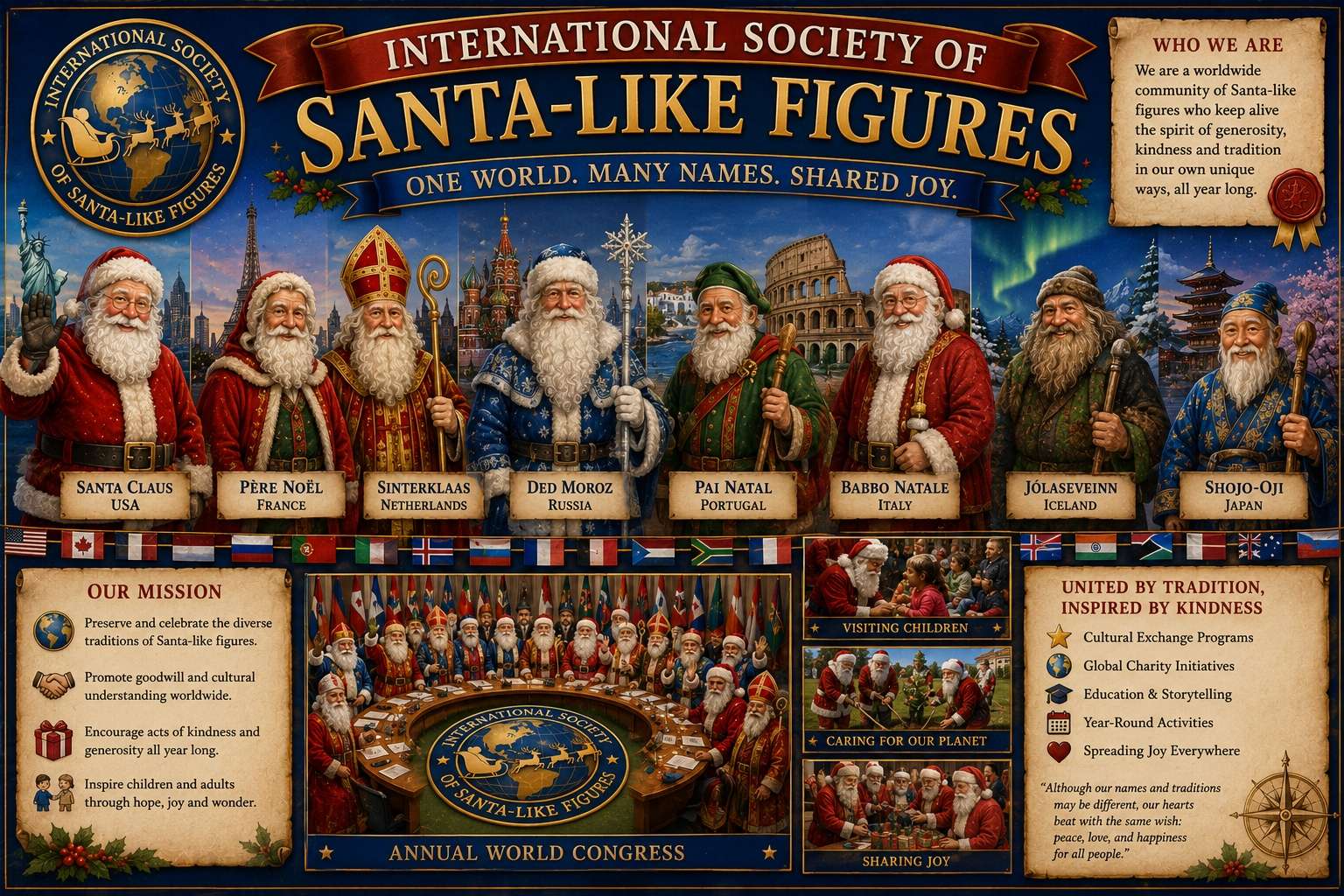
After his death, veneration of Saint Nicholas spread across Europe, evolving differently in each culture: into Sinterklaas in the Netherlands, Saint Nicolas in France, and eventually, through Dutch settlers in colonial New York, into the English “Santa Claus.” His feast day, December 6th, is still celebrated separately from Christmas across much of Central and Eastern Europe.
How One Bishop Became Dozens of Different Figures
What makes Saint Nicholas particularly remarkable is how differently his legacy evolved across cultures: the Dutch turned him into the formal, ship-arriving Sinterklaas; the Germans split him into the religious Nikolaus and the secular Weihnachtsmann; the French paired him with the punishing Père Fouettard; and Americans eventually stripped away most religious elements to create the largely secular, commercial Santa Claus.
Modern historians and folklorists continue to study Saint Nicholas not just as a religious figure, but as a case study in how a single historical person’s reputation for generosity can splinter and evolve into dozens of distinct cultural traditions over seventeen centuries, each shaped by local religion, politics, and commerce.
Frequently Asked Questions About Saint Nicholas
Is there physical evidence Saint Nicholas existed? Yes, historical records place him as Bishop of Myra in the 4th century, and his relics are venerated in Bari, Italy, and elsewhere.
Why is December 6th important? It’s traditionally observed as Saint Nicholas’s feast day, celebrated separately from Christmas across much of Europe.